


- B.S. Biology, West Liberty State College, 2002
- M.S. Biology, Marshall University, 2005
- Ph.D. Ecology and Evolution; Biology, Indiana State University, 2011
Experience
- Professor of Biology, West Liberty University – present
- Associate Professor of Biology, West Liberty University – 2015 to 2019
- Instructor of Biology, West Liberty University – 2008 to 2011
- Natural History Research Specialist – West Liberty University – 2006 to 2008
- Natural History Research Specialist – Oglebay Institute Schrader Environmental Education Center – 2005 to 2006
- Animal Keeper and Zoo Educator – 1999 to 2001
Research and Interests
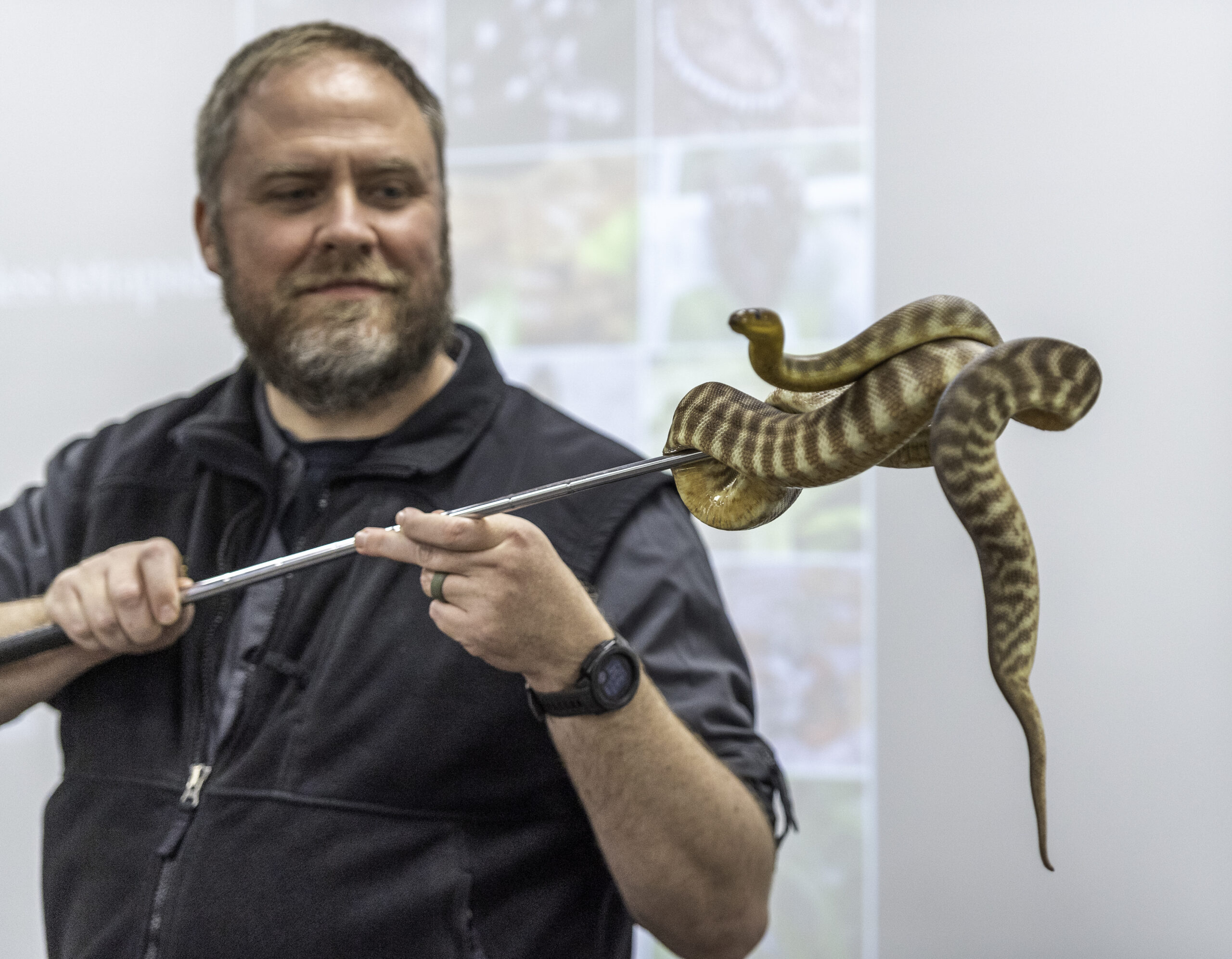
Dr. Loughman’s current research focuses on the taxonomy, natural history, and conservation of freshwater crayfish. Loughman and his students work hand in hand with both state and federal level conservation agencies to ensure crayfish conservation remains a priority at both the state and regional level.
Since the inception of his laboratory at WLU in 2006, Dr. Loughman and his students have completed crayfish conservation assessments in ten states, sampled over 4,000 streams, rivers, and wetlands, and published over 25 peer-reviewed articles, including descriptions of 5 new species of crayfish. Loughman has worked on the development of captive husbandry techniques for imperiled stream-dwelling Appalachian crayfish, as well as continuing to do crayfish surveys and species descriptions.
Loughman has won several awards for his teaching abilities, including Faculty Merit West Virginia Professor of the Year for 2014. Early in his career, Loughman completed research on amphibians and reptile natural history and conservation. Since the inception of the Zoo Science Program, He has maintained his crayfish research effort and has returned to his roots in developing a research program focused on reptile captive husbandry techniques and conservation.
Diana Barber, Ph.D.
Assistant Professor of Biology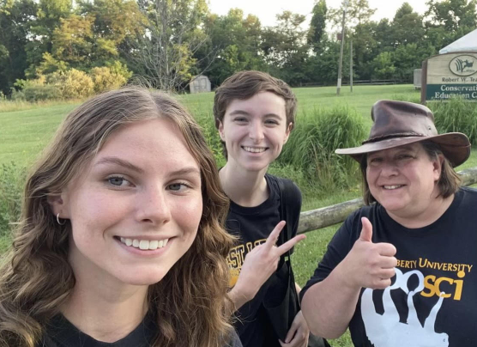
Education
- B.A., Dartmouth College; Hanover, NH, 1992
- Ph.D., University of Illinois at Urbana-Champaign, 2000
Experience
- Assistant Professor of Biology – January 2019 to present
- Education Curator, Mesker Park Zoo & Botanic Garden – 2000 to 2018
- Accredited by AZA in March 2002
- Adjunct Faculty, University of Southern Indiana – September 2006 to May 2018
- Teaching Assistant, School of Life Sciences – University at Urbana-Champaign – 1993 to 2000
- University Fellow, School of Life Sciences – University of Illinois at Urbana-Champaign – 1992 to 1993
Research and Interests
Dr. Barber’s research interests reflect her lifelong love of the intentional use of operant & classical conditioning to improve the lives of animals in human care, her graduate research into the behavioral ecology of bats, and almost 20 years managing ambassador animals. Graduate and undergraduate students working under her direction have also investigated improving enrichment for insectivores, cooperative husbandry training, creating ambassador animal guidelines, and enhancing the welfare of primates and bears in human care.
Current Projects:
- Acoustic surveys of bat biodiversity in WV’s Northern Panhandle
- Building sustainable animal ambassador collections by enhancing the juvenile experience
- Evidence-based husbandry
- Reptile personality and intelligence
Matthew McKinney, Ph.D.
Assistant Professor of Biology
Education
- A.S. Computer Information Technology, WV Tech, 2005
- B.S. Biology and BS Environmental Science, West Liberty University, 2009
- M.S. Entomology, West Virginia University, 2012
- Ph.D. Entomology, West Virginia University, 2016
- Assistant Professor of Biology, West Liberty University – 2024 to present
- Communications Coordinator, West Virginia Academy of Science – 2024
- Visiting Professor of Biology, West Virginia University Institute of Technology – 2023
- Associate Professor of Biology, Alderson Broaddus University – 2018 to 2023
- Post-doctoral Fellow, West Liberty University – 2018
- Adjunct Instructor of Biology, Davis and Elkins College – 2017 to 2018
Research and Interests
Dr. McKinney’s research emphasizes avian population monitoring and conservation. Dr. McKinney created the West Liberty Bird Observatory in 2024 to provide his students with the opportunity to learn bird banding, mist netting, callback survey, and bal-chatri trapping methods. He is currently overseeing research on Eastern Screech Owls and American Kestrels.
Additionally, Dr. McKinney has taken on the role of Applied Conservation Program Coordinator. He is working to expand the scope of the applied conservation program to create new experiences and opportunities for its students. He teaches courses in Ornithology, Applied Conservation, Arthropod Diversity, and Natural History. His teaching in these courses emphasizes the importance of hands-on experience during the learning process.
Follow along on Instagram

Jeremiah Dann
Instructor of Biology
Education
- B.S. Biology, Indiana University, 2000
- M.S. Biology, Ball State University, 2004
- M.S. Marine Studies, University of Delaware, 2008
The occurrence of earthworms and their effects are generally associated with good soil quality. Soil of good quality mediates water flow through the environment, buffers and mineralizes organic wastes, is topographically safe, and sustains biodiversity.
Assessing soil quality is important for several reasons, including:
- Raising public awareness of soils as an important resource,
- Indicating soil functionality (as living space, biodiversity resource, biomass production, water uptake, distribution, storage, decomposition, and degradation), and
- Monitoring global trends of change in ecosystems and in the soil in particular.
This includes:
- The abundance and species composition of earthworm fauna at a particular site,
- The behavior of individual earthworms in contact with a soil substrate (preference/avoidance/activity),
- The accumulation of chemicals from the soil into the body, and
- The biochemical/cytological stress-biomarkers in the earthworm.
The goal of these surveys is to collect data on a variety of soil zoological parameters throughout the summer. These parameters will include earthworm abundance, biomass, community structure, and species biomass dominance. Additionally, habitat data will be collected for a variety of soil parameters, including pH, moisture, and texture, to help students inventory earthworms in relation to soil properties and site characteristics. In this way, students will be able to determine the habitat preferences and requirements for local earthworm assemblages.
Soil quality is not the only parameter that determines the abundance of an earthworm population. Other factors, such as food availability and climate, also play a role. Weather, droughts, and freezing events, in particular, play a role in decimating populations and initiating phases of recovery. Soil moisture seems to be a key limiting factor for earthworm populations. By monitoring earthworm populations, rather than just focusing on single samples, we can hopefully observe the effects of these events on the populations so as to understand better whether populations may be in a phase of recovery and not be typical for the soil parameters of its environment.
Kinsey Skalican Guthrie
Assistant Curator of Living Collections
Education
- B.S. Environmental Biology and Education, West Liberty University
- M.A. Community Education, West Liberty University
- M.S. Zoo Science, West Liberty University
Experience
- Assistant Curator of Living Collections, West Liberty University – 2023 to present
- Animal Care Coordinator, West Liberty University – 2016 to 2023
- Good Zoo Volunteer Coordinator
- Oglebay Institute Schrader Environmental Education Center
- Field Technician, West Liberty Astacology Lab
Research and Interests
Mrs. Guthrie is actively developing and maintaining the West Liberty University animal collection, leading students through class projects, and training lab ment.
Guthrie’s thesis for her Master’s in Zoo Science focused on New Calendonia Rhacodactylus lechaianus, commonly known as the Leachie gecko.
Guthrie has a giant passion for all animals. She enjoys learning and teaching her students. She loves to go camping and hiking and also enjoys crocheting in her “spare” time.
Lauren Mort
Animal Care Specialist 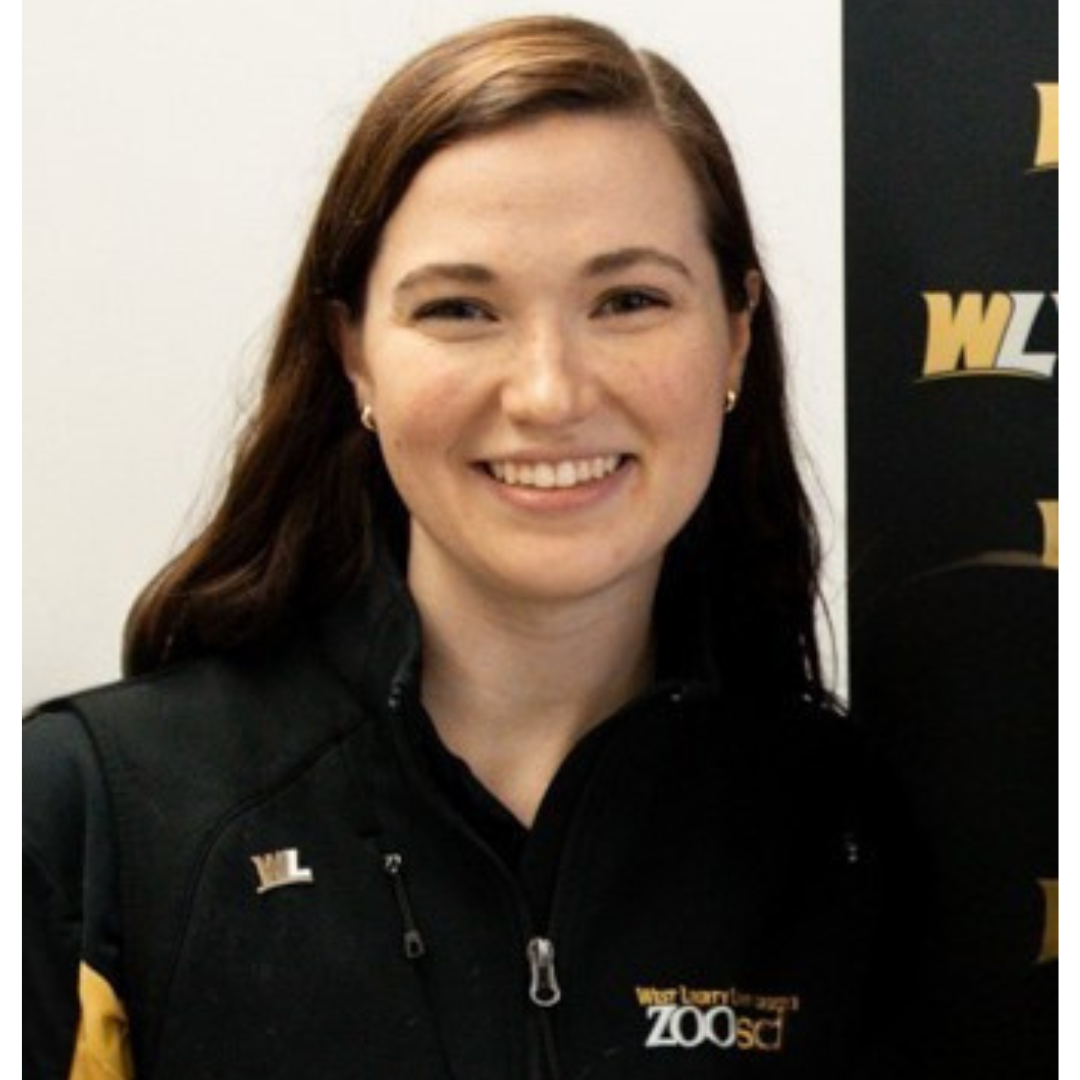
Education
- B.S. Biology – University of Mary Washington, 2018
- Animal Care Specialist, West Liberty University – 2023 to present
- Program Keeper, Oglebay Good Zoo – 2021 to present
- Animal Keeper, Oglebay Good Zoo – 2018 to 2021
Bree Blum
Administrative Assistant 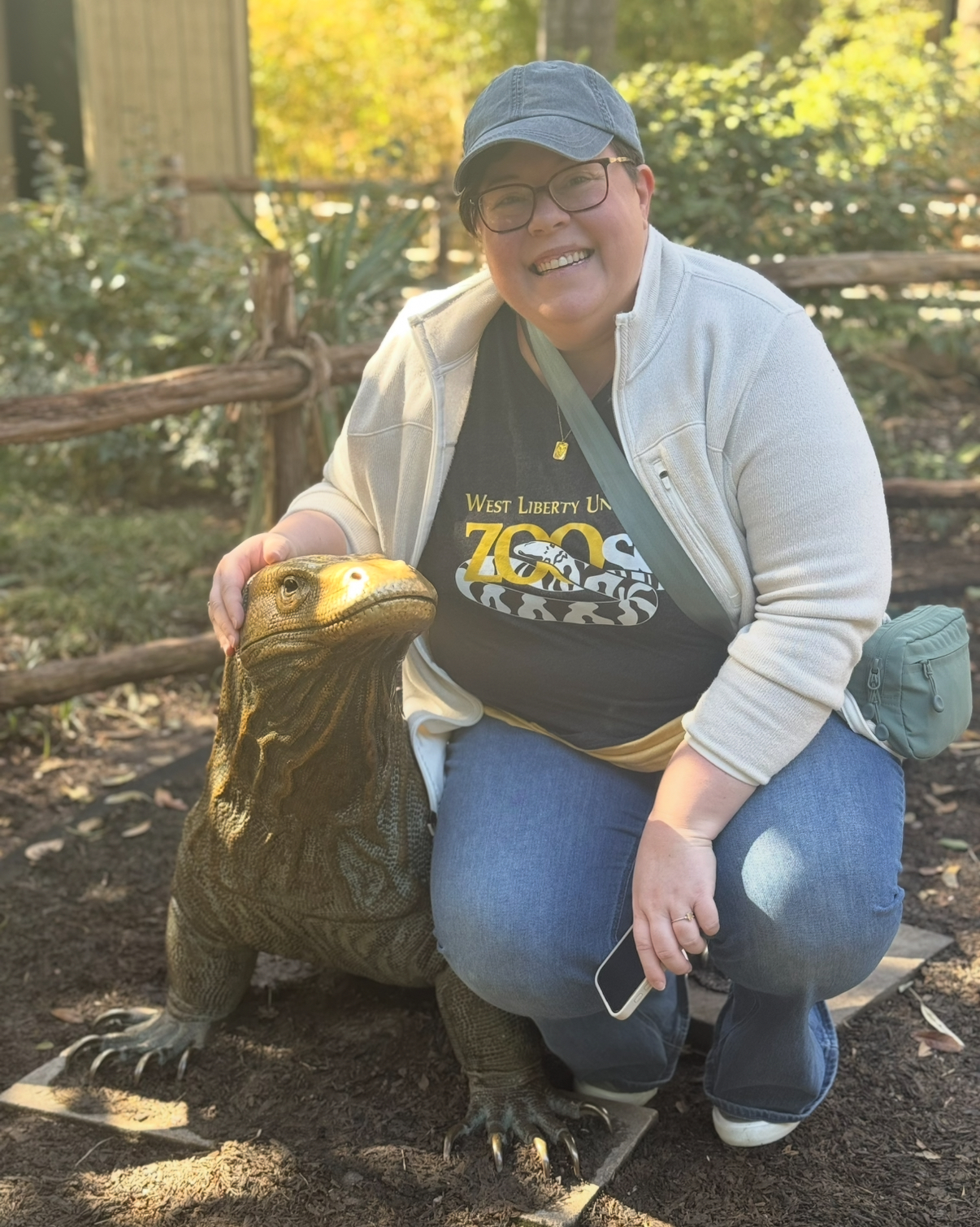
Education
- B.A. Elementary Education – West Liberty State College, 2005
- M.Ed. Elementary Education & Literacy, Language and Learning – Marshall University, 2007
- A.A.S. Sign Language Interpretation – WV Northern Community College, 2013
Interests
Ms. Blum loves the outdoors and enjoys spending time with family and friends around a campfire. She leads an online women’s ministry and sells her own handmade pottery. She is an axolotl mom, avid reader and writer, and is fondly known as the Knower of All Things in the WLU Biological Sciences Department.