
Minor in Speech Pathology and Audiology
Gain foundational knowledge in human communication, speech, language, and hearing sciences to complement your major and expand your career opportunities.
Build a Strong Foundation in
Human Communication Sciences
The Minor in Speech Pathology and Audiology introduces students to the scientific and clinical foundations of human communication and communication disorders. Grounded in national standards from the Council for Clinical Certification (CFCC), this minor provides exposure to the biological, neurological, acoustic, developmental, and linguistic bases of communication.
It is designed to complement majors such as education, psychology, health sciences, and related helping professions, while also strengthening preparation for graduate study in speech-language pathology or audiology.
Quick Facts:
- Credit Hours: 22 total
- Format: On-campus
- Outcome: Foundational knowledge aligned with ASHA CFCC Standards; prerequisites completed to pursue a Master’s degree in Speech-Language Pathology if desired
Program
Overview
The minor provides a structured introduction to normal and disordered communication across the lifespan. Students explore how speech, language, hearing, and cognitive processes develop and how breakdowns in these systems impact daily communication.
Coursework emphasizes both theoretical understanding and introductory exposure to clinical concepts, preparing students for interdisciplinary work in education, healthcare, rehabilitation, and communication-focused careers.
Who This
Minor Is For
This minor is a strong fit for students who are:
- Majoring in psychology, education, exercise physiology, health sciences, or related fields
- Interested in speech, language, hearing, or communication development
- Considering graduate study in speech-language pathology or audiology
- Planning careers in healthcare, rehabilitation, or education support roles
- Seeking a stronger understanding of human communication and disability
What
You’ll Learn
Students gain foundational knowledge aligned with national standards in communication sciences and disorders.
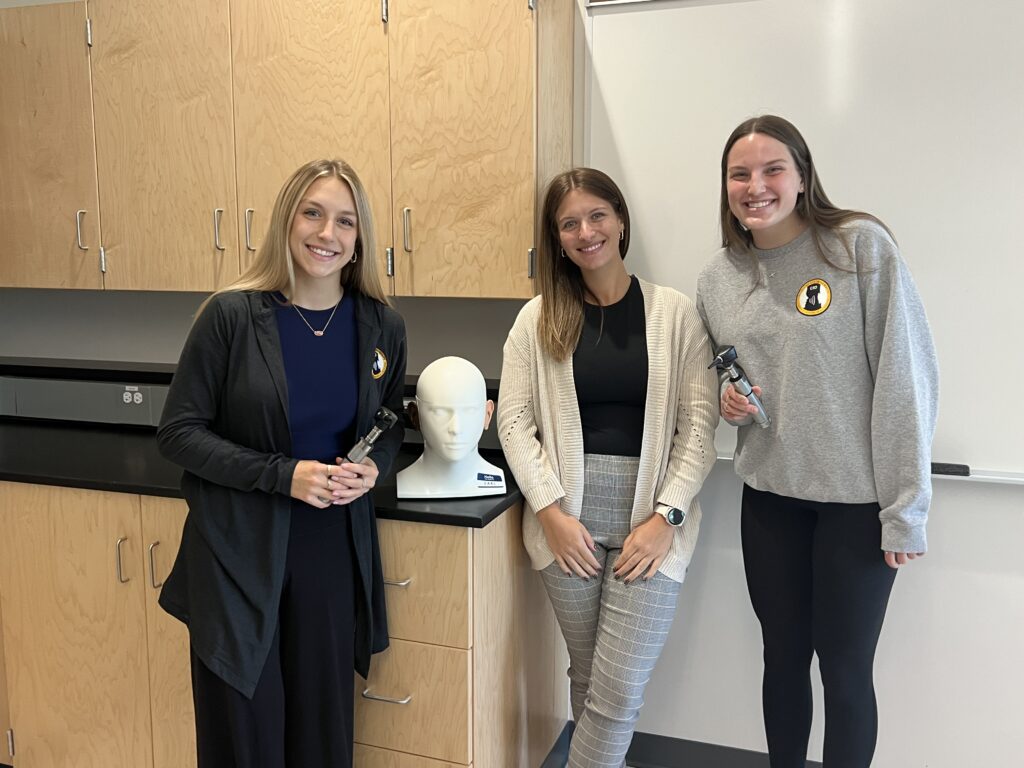
Foundations of Communication Sciences
- Biological and neurological bases of speech and hearing
- Acoustic and physical properties of sound
- Development of speech and language across the lifespan
Communication Disorders Overview
- Introduction to speech, language, and hearing disorders
- Characteristics and impact of communication impairments
- Cultural and developmental influences on communication
Applied Understanding
- Introductory exposure to clinical practice concepts
- Observation of communication disorders and clinical methods
- Basic understanding of assessment and intervention approaches
Curriculum
Requirements
The minor consists of 22 credit hours of required and elective coursework.
Required Courses (19–20 credits)
- SPA 150 – Phonetics (3)
- SPA 151 – Survey of Communication Disorders (3)
- SPA 152 – Introduction to Acoustics (3)
- SPA 156 – Anatomy & Physiology of the Speech & Hearing Mechanism (4)
- SPA 250 – Language Science (3)
- SPA 251 – Introduction to Clinical Practice: Audiology (3)
Choose One Elective (3 credits)
Select one course from:
- SPA 255 – Speech Science
- SPA 310 – Communication Problems of the Aged
- SPA 316 – Language Disorders: Children & Adolescents
- SPA 400 – Observation in Communication Disorders
- SPA 430 – Assessment & Management of Communication Disorders
Total Credits: 22
How This Minor
Adds Value
Students who complete this minor will:
- Strengthen preparation for graduate study in communication sciences and disorders
- Gain a competitive advantage in healthcare and education-related fields
- Build interdisciplinary knowledge applicable to human services careers
- Develop a stronger scientific understanding of human communication
Program
Format
- Completed alongside any bachelor’s degree
- Flexible sequencing across multiple majors
- On-campus instruction
- Integrated with undergraduate general studies requirements
How to Declare
the Minor
To add the Minor in Speech Pathology and Audiology, students must:
- Be admitted to West Liberty University
- Meet with an academic advisor
- Complete a minor declaration form
Advisors assist students in integrating coursework with their major requirements.
Advising &
Next Steps
Students are encouraged to meet with an advisor early to:
- Plan course sequencing
- Coordinate with major requirements
- Explore graduate school prerequisites
Become A
Hilltopper
West Liberty University is a place where you can pursue your dreams and prepare for the future. With more than 60 programs, a vibrant campus life, small classes, and an affordable cost, the quality education you’ll get at West Liberty is like no other.