

» Assessing Zinc Nutriture
  • Assessing Zinc Nutriture

    February 23, 2013 Research webmaster

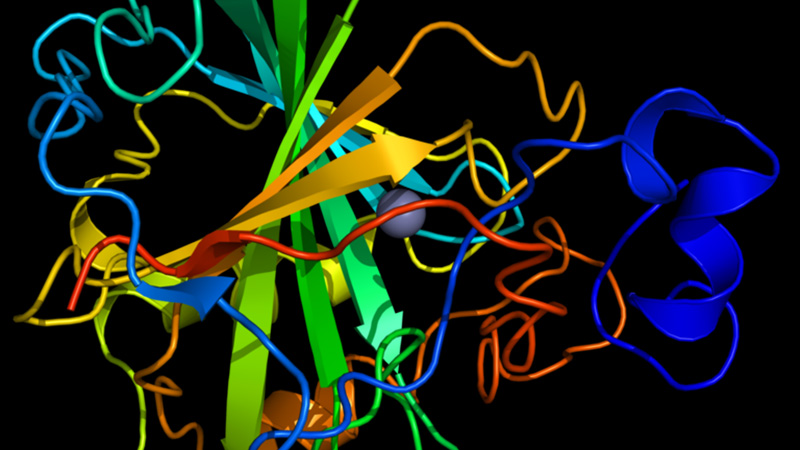
    Carbonic anhydraseMatthew Zdilla

    The Zdilla Lab is involved in research aiming to produce new clinical measurements and discover new links between human structure and function.


    • A novel method of assessing zinc nutriture: (Starkey, Saling, Basil)
      A new, noninvasive, method of assessing the adequacy/inadequacy of zinc nutrition based on the taste perception of zinc is being developed.  The implications of the new clinical measurement technique are wide-ranging from gaining insight into immune function and reproductive function to predicting predispositions to cavities, anorexia, and problems with brain function.
    • Correlating salivary carbonic anhydrase VI (gustin) with zinc taste perception and immunity: (Starkey)
      An enzyme in saliva known as “gustin” may have a great influence over how we taste metals, such as zinc.  It also plays a role in the pH balance of our oral cavity.  The enzyme may also be a window into our immune function.  We are measuring gustin concentrations in saliva and exploring its correlations with human health.
    • Circumvallate papillae characteristics and zinc taste perception: (Hunt, Gibson)
      Taste buds, the small structures that house our taste receptors are located, predominantly, in organs called papillae.  We are using endoscopy and intraoral photography to view circumvallate papillae located at the far back of the tongue in order to learn more about how their characteristics are related to our ability to taste zinc.
    • Fungiform papillae characteristics and zinc taste perception: (Quikel, Dennis)
      Fungiform papillae are organs located, chiefly, at the tip of the tongue.  These organs house taste buds.  We are analyzing the density and physical characteristics of these papillae to explore their relationship with the ability to taste zinc.

    Student Researchers:

    • Leah Starkey - Senior, Majors: Biology and Chemistry, Pre-Med
    • Julia Saling - Senior, Majors: Biology and Chemistry, Pre-Med
    • Alicia Hunt - Senior, Major: Dental Hygiene
    • Laken Gibson - Senior, Majors: Biology and Exercise Physiology, Pre-Dental
    • Kurtis Dennis - Sophomore, Major: Biology, Pre-Dental
    • Lauren Quickel - Freshman, Major: Nursing

    Matthew Zdilla’s Faculty Page


  • http://westliberty.edu/college-of-sciences/wp-content/themes/cos-feb2013/resize.php?get_image=%2Fwp-content%2Fblogs.dir%2F69%2F/files/2013/02/800x450px-Carbonic_anhydrase_1CA2.jpg&w=800&h=450&noimage=1

    Assessing Zinc Nutriture

    Matthew Zdilla

    The Zdilla Lab is involved in research aiming to produce new clinical measurements and discover new links between human structure and function.

    Details
    http://westliberty.edu/college-of-sciences/wp-content/themes/cos-feb2013/resize.php?get_image=%2Fwp-content%2Fblogs.dir%2F69%2F/files/2013/02/testslide2-800x450.jpg&w=800&h=450&noimage=1

    MRI of the Human Brain

    Fuhua Chen

    Analysis of tissue volumes in human brains, and its relation to some diseases based on magnetic-resonance-imaging (MRI) image processing

    Details
    http://westliberty.edu/college-of-sciences/wp-content/themes/cos-feb2013/resize.php?get_image=%2Fwp-content%2Fblogs.dir%2F69%2F/files/2013/02/testslide3-800x450.jpg&w=800&h=450&noimage=1

    Freshwater Crayfishes

    Zachary Loughman

    Research in my lab focuses on crayfish natural history, taxonomy, and conservation biology, with an emphasis on crayfishes that occur in West Virginia.

    Details
    http://westliberty.edu/college-of-sciences/wp-content/themes/cos-feb2013/resize.php?get_image=%2Fwp-content%2Fblogs.dir%2F69%2F/files/2013/02/testslide1-800x450.jpg&w=800&h=450&noimage=1

    Francisella Tularensis

    Joseph Horzempa

    Francisella tularensis is a highly infectious microorganism with fewer than 10 inhaled bacteria causing the fatal disease tularemia.

    Details
  • About

    The College of Sciences is comprised of two Departments: Natural Sciences and Mathematics and Health Sciences.

    • The Department of Natural Sciences and Mathematics is home to Biology, Chemistry, Mathematics, and Physics.
    • The Department of Health Sciences houses Dental Hygiene, Nursing, Medical Laboratory Sciences, and Speech Pathology and Audiology.

    There are thirty-four faculty members and nine staff members within the College.

    “The most beautiful experience we can have is the mysterious. It is the fundamental emotion which stands at the cradle of true art and true science.” – Albert Einstein


  • Contact

    The College of Sciences
    Dean: Dr. Robert Kreisberg
    Phone: 304.336.8062
    Fax: 304.336.8266

    Your Name (required)

    Your Email (required)

    Subject

    Your Message

    captcha

    Enter the text:


  • Home
  • About
    • Dean’s Letter
    • Degrees Offered
    • MS Physician Assistant Studies
    • Natural Sciences & Mathematics
    • Health Sciences
    • Forms
      • Human Subject Review Protocol
  • Contact
Return to WLU